Exalting God, Edifying Believers, Evangelizing the Lost

What Makes a Great Mother

The idea of what makes a good mother changes, depending on your perspective and place in life.

When my children were younger, it was always a challenge to get them to eat healthy food on a regular basis.  Sometimes, the struggle was so overwhelming that success was redefined as just getting them to eat three meals in a day that had some kind of nutrition in them.  On one particularly challenging day for our family, my wife was already worn out even before breakfast started.  As I came down to the breakfast table, there sat my children, all eating chocolate cake and milk.  Totally confounded, I asked what was going on, and my children replied almost in unison, “Mom is great! She gave us chocolate cake for breakfast!”

Obviously, their perspective at that point of what made a great mother was much different than what God says a great mother is:

Favour is deceitful, and beauty is vain: but a woman that feareth the LORD, she shall be praised” (Proverbs 31:30).

Great mothers are defined by God as those who live in reverence of Him, using His standard of holiness and love as the measuring line.  Understanding that their children are just part of their stewardship before God, they teach them in wisdom and kindness (Proverbs 31:26).

Chocolate cake for breakfast may be fun once in a while, but fun times like that are not nearly as important as the consistent example of a God-fearing mother.

Above the Law?

Have you noticed how many political leaders consider themselves to be above the law, acting as if the law is for “regular” people while they do whatever they like?

With this feeling of superiority comes also a feeling of invincibility.  Even when they are caught doing something wrong, it seems that they never suffer consequences because of their status or position.

As believers, we can still be assured that God’s judgment of evildoers is assured and that no one will be spared.  Revelation 6:15-17 says this:

“And the kings of the earth, and the great men, and the rich men, and the chief captains, and the mighty men, and every bondman, and every free man, hid themselves in the dens and in the rocks of the mountains;  (16)  And said to the mountains and rocks, Fall on us, and hide us from the face of him that sitteth on the throne, and from the wrath of the Lamb:  (17)  For the great day of his wrath is come; and who shall be able to stand?”

While this passage describes those who will go through the Great Tribulation, the principle of God’s judgment and wrath applies to us today.

If we do not submit to Jesus Christ as our Lord and Savior now, we will receive God’s judgment later–and it may come sooner than we think.

And when it comes, it doesn’t matter what position we hold or how rich we are or where we stand in society. If we do not kneel before Christ now, we will not be able to stand before Him when He comes as our Judge.

The Lion or the Lamb?

Have you ever had someone describe another person to you, and when you finally met that person, he or she was totally different than what you expected?

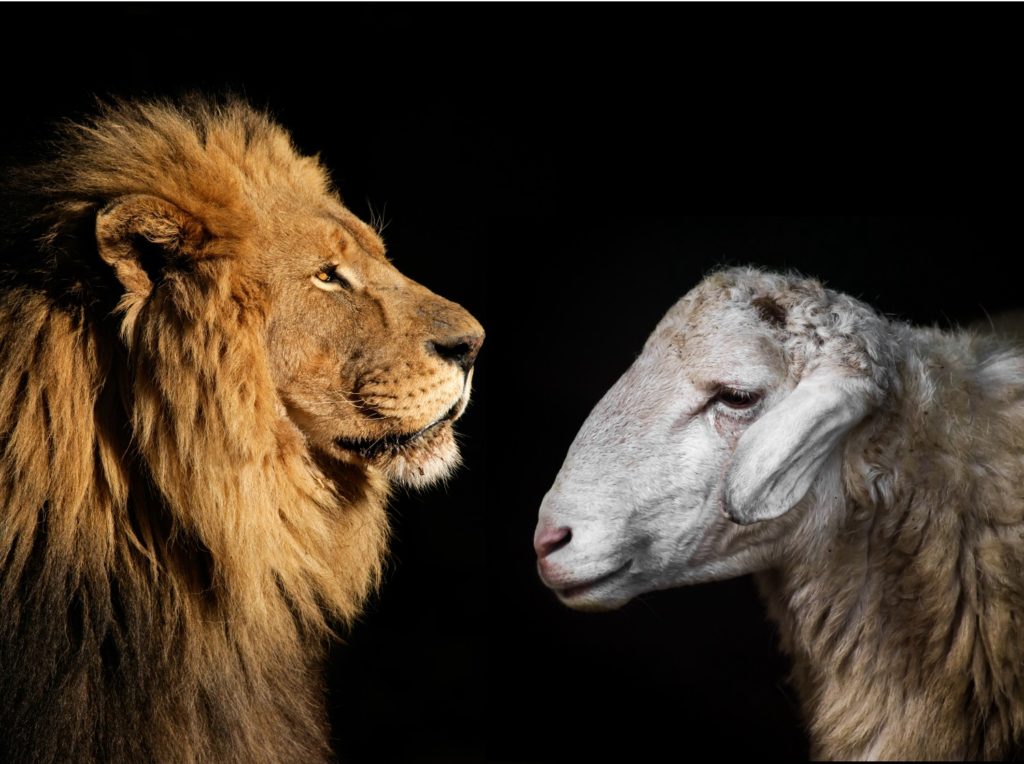
The Apostle John had an experience like this that he describes in Revelation 5.  In verse 5, one of the elders from around the throne of God describes the exalted Jesus Christ as “the Lion of Judah,” indicating that Christ is about to execute fierce judgment against all wicked doers.

Then John looks up and sees Jesus in the middle of God’s throne. But what he sees is not a Lion.  John says in Revelation 5: 6,

“And I beheld, and, lo, in the midst of the throne…stood a Lamb as it had been slain.”

John was looking for a Lion, and instead, he saw a lamb—THE LAMB OF GOD.

Why was there such a difference between the elder’s description and what John saw in Jesus Christ?

What the elder was describing was Christ as the Lion, a fierce and faithful judge worthy to execute judgment upon the world and punish sinners.  And that is exactly what is about to happen in chapter 6.

But John, although a sinner, was redeemed and forgiven through faith.  So, when he looked at Christ, he did not find a judge but saw the Lamb who had paid the price for his sins.

It is the same for all those who have submitted to Christ in faith.  What will you find when you finally see Christ face to face: the Lion or the Lamb?

The Hope of Salvation

Even though we may be true believers, redeemed through Christ’s blood, our salvation is not complete.

In Romans 8:24, Paul says,

“For we are saved by hope: but hope that is seen is not hope: for what a man seeth, why doth he yet hope for?”

One thing that salvation brings is hope.  But we can only hope for something that we haven’t received yet.

So does Paul mean that we are not really saved?

No. What he is saying is that the salvation of our souls from the power and penalty of sin is just part of what Christ is going to give us. Our salvation won’t be completed until our bodies are free from the effects and influence of sin, and that will happen when we finally reach heaven.

And it’s not just people that have this hope. In verse 22, Paul says, “For we know that the whole creation groaneth and travaileth in pain together until now.”

Some day in Christ’s Kingdom, we will have perfected bodies to go with our perfected souls and we will be able to live in a perfected world, just the way God intended at Creation.

Salvation is so much more than just staying out of hell.  But all of this is only available to us because Christ became our “kinsman redeemer,” buying us out of slavery and reclaiming the title deed to the earth through His death and resurrection.

The Mighty Cherubim

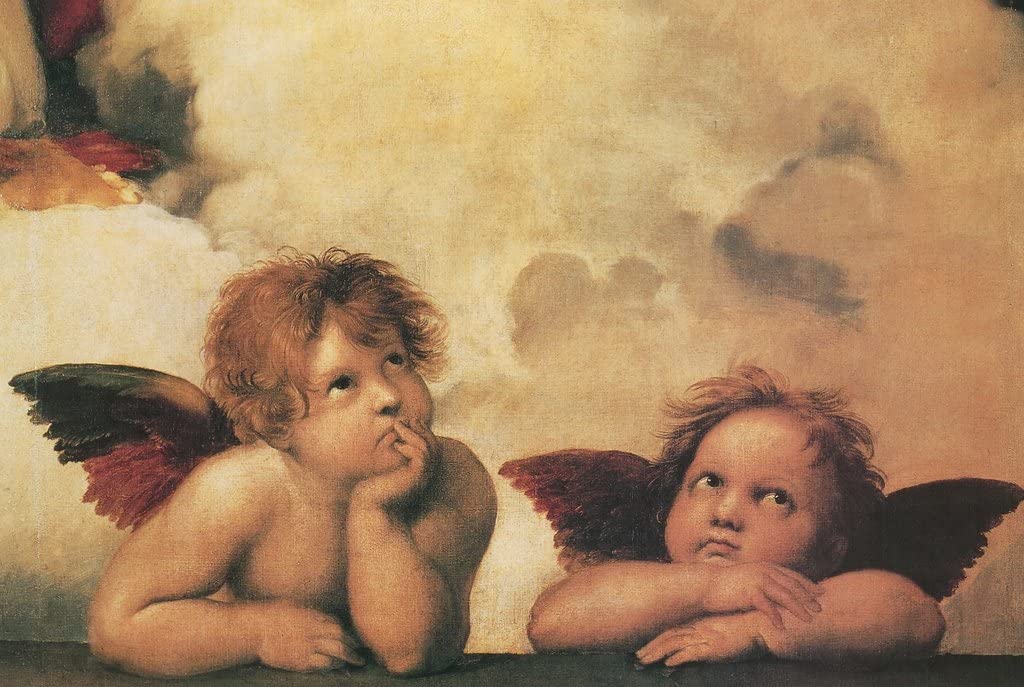
Have you ever heard someone refer to a baby as being “a little cherub”?

What comes to mind is probably an image of a chubby little angel flying around in a draped white cloth with dimples and a bow and arrow. Yet, if we actually met a cherub, we would probably shrink in fear, as those did in Scripture who actually came face to face with one of God’s greatest created beings.

Ezekiel was one such man, and he describes the Cherubim in Ezekiel 1:13 —

“As for the likeness of the living creatures, their appearance was like burning coals of fire, and like the appearance of lamps: it went up and down among the living creatures; and the fire was bright, and out of the fire went forth lightning.”

There is nothing cute in that description. And there shouldn’t be. The Cherubim were created by God to worship Him, just as all creation was. We see that in Isaiah 6 and Revelation 4.

But Cherubim are also used by God to carry out His judgment upon the earth.  Cherubim with flaming swords were placed at the garden of Eden to keep Adam and Eve from returning after they sinned.  And it will be Cherubim that announce the four horsemen of the Apocalypse in Revelation 6.

Praise God that if we are on His side, these mighty warriors of the Lord will be with us and not against us.

The Reality of Heaven

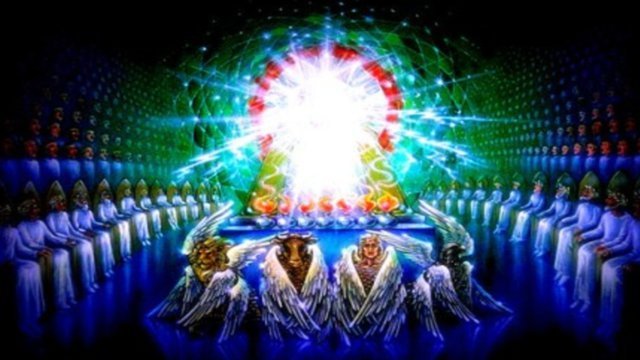
There are many people who have claimed to have died and gone to heaven and then returned with descriptions of what they saw and experienced.  Some say they met deceased family members and friends. Others said they saw perfect versions of animals roaming together in peace.  Many say they met Jesus in person, and yet the descriptions they give of Him are not all the same.

What is interesting, though, is that most of their descriptions of heaven do not even come close to what we read in Scripture from people who actually saw it.  The Apostle John describes what he saw in heaven:  angels and elders, worshipping around the throne of God.

In Revelation 4:8, He describes that worship—

and they rest not day and night, saying, Holy, holy, holy, Lord God Almighty, which was, and is, and is to come.” In verses 10-11, he continues, “The four and twenty elders fall down before him that sat on the throne, and worship him that liveth for ever and ever, and cast their crowns before the throne, saying, Thou art worthy, O Lord, to receive glory and honor and power: for thou hast created all things, and for thy pleasure they are and were created.”

When Isaiah described his vision of heaven in Isaiah 6, he had the exact same description, minus the elders.  Ezekiel has a very similar vision in Ezekiel chapter 1.

Heaven is not what we imagine it to be.  It is an eternal existence where the Lord of heaven and earth will be worshipped continually by all those who are in His presence.

And to be with Him in person as we worship will be the best eternity possible.

The Goal of Holiness

The goal of holiness to many Christians ends up being a subjective issue that depends upon each person’s preferences and opinions.

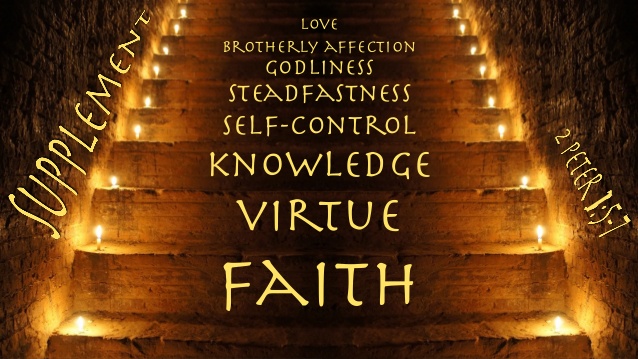
But if we use God’s definition, there really is nothing subjective about it.  2 Peter 1:5-8 defines the process and goal of holiness:

“And beside this, giving all diligence, add to your faith virtue; and to virtue knowledge; And to knowledge temperance; and to temperance patience; and to patience godliness; And to godliness brotherly kindness; and to brotherly kindness charity.  For if these things be in you, and abound, they make you that ye shall neither be barren nor unfruitful in the knowledge of our Lord Jesus Christ.”

In these verses, we see a progression of growth as the characteristics of Jesus Christ are added to our lives.  It starts with simple faith and grows in maturity until we finally reach unselfish sacrificial love. Those are not human attributes; they are the attributes of God.

Peter also says that as God’s characteristics grow in us, then He will be able to use us for His purpose—we will not be “barren or unfruitful.”

Our ultimate goal is to glorify God in everything we do, and the only way that can happen is when people see God in us instead of us.  God wants people to see His character, not our own. That is the goal of holiness.

So really, becoming holy as God has called us to be holy just requires us to let God take out of us everything that is us, and let Him put in us everything that is Him.

The Purpose for Pain

Why pain and suffering exist is a question that has been asked by many throughout history. “If God truly loves us, why would He allow us to suffer?” That is a question even true believers ask, because we struggle and suffer in this world, many times through no fault of our own.

In 1 Peter 4:13, we are told,

“But rejoice, inasmuch as ye are partakers of Christ’s sufferings; that, when his glory shall be revealed, ye may be glad also with exceeding joy.”

Suffering either reveals the character of Christ within us, or it reveals our own selfish heart. If we can rejoice in God’s work being accomplished in us through suffering, then we demonstrate our true faith in God. But if we complain and doubt God’s goodness, then it reveals in us a faithless heart.

C.S. Lewis alludes to this truth in his book, The Problem of Pain: “God whispers to us in our pleasures, speaks in our conscience, but shouts in our pains:  it is His megaphone to rouse a deaf world…. No doubt pain as God’s megaphone is a terrible instrument; it may lead to final and unrepented rebellion.  But it gives the only opportunity the bad man can have for amendment.  It removes the veil; it plants the flag of truth within the fortress of a rebel soul.”

What has your suffering revealed about you? Are you rejoicing in God’s work, or are you complaining in your own selfishness and unbelief?

The Light of the World

In John 9:5, Jesus says, “I am the light of the world.”  Yet in Matthew 5:14, Jesus says to his followers, “Ye are the light of the world.” Is this a contradiction? Who really is the light of the world—us or Jesus?

The answer is both, and it is explained in Genesis 1.

On the fourth day of Creation week, God made the sun, moon and stars.  Genesis 1:16 tells us that God made two great lights:

the greater light to rule the day, and the lesser light to rule the night.”

We know them as the sun and the moon. We also know that the moon doesn’t give off its own light, but only reflects the light from the sun to give us some illumination during the night time.

That is exactly what Jesus meant when He said that we were the light of the world.  We are not giving off our own light, but merely reflecting the light of Christ in our lives so that others may see His truth.

And that is exactly what 1 Corinthians 10:31 means when it says that we are to “do all to the glory of God.” 

The light that we give off as Christians is really the glory of God’s character being reflected in how we live in obedience to His Spirit.  When we love others, we are literally pointing others to the source of that love.  When we have peace in trying circumstances, we reflect the source of that peace to others. When we are longsuffering with those that revile us and persecute us, we reveal the nature of the One who suffered most at the hand of His enemies.

So giving glory to God is nothing more than letting His light be reflected in our lives.  We are merely a moon; He is the sun.

The Worth of Your Life

In Luke 17:33, Jesus said,

“Whosoever shall seek to save his life shall lose it; and whosoever shall lose his life shall preserve it.”

Our lives really are not worth much unless we are living to fulfill God’s purpose for us. But all too often, Christians do everything they can to preserve the life of comfort and prosperity that they have built for themselves.

In Romans 12:1, Paul tells us that we are to “present our bodies a living sacrifice.” That means that we should be willing to give up whatever we want our lives to be so that God can use us in whatever way He wants.

But how many Christians really are willing to live that way?

On January 8, 1956, while attempting to make contact with the people of the Auca/Waodani Indians in Ecuador, Jim Elliott and four other missionaries were speared to death by the very people they came to minister to. Elliot’s most famous words were written in a journal six years earlier: “He is no fool who gives what he cannot keep, to gain what he cannot lose.”

His wife embodied the same attitude—several years later, she left her life in the United States and moved to Ecuador to minister with her young daughter to the same people that had killed her husband.

Jim Elliot’s life was not a waste. God used his death to pave the way for his wife to bring the gospel to a lost tribe of Indians. Through her ministry, almost the entire tribe came to Christ.

You will never know what God can accomplish through your life until you are willing to give it up for Him.