
Exalting God, Edifying Believers, Evangelizing the Lost

Christ’s Kingdom of Peace

“Of the increase of his government and peace there shall be no end…”

Isaiah 9:7 reminds us that God’s answer to the world’s confusion is not a program, a policy, or a philosophy—it is a Person. The Child promised in verse 6 is the King described in verse 7, and His kingdom is unlike anything this world has ever produced. Human governments rise and fall, but the government of Christ grows with steady, unstoppable purpose. God’s promises are “lights along our path,” and this verse shines especially bright in dark times.

Isaiah tells us that Christ’s kingdom is marked by peace, not the fragile peace of treaties or temporary agreements, but the deep, reconciling peace that comes from being right with God. His rule brings wholeness to broken hearts and stability to troubled minds. And this kingdom is not shrinking—it is increasing. Every life transformed by grace, every heart surrendered to His lordship, becomes another testimony that His reign is real and active today.

The verse ends with a precious assurance: “The zeal of the LORD of hosts will perform this.” We are not depending on human effort to bring in God’s kingdom. It is God’s own passion, God’s own commitment, that guarantees the fulfillment of His promise.

When life feels uncertain, remember that your King is on the throne, His kingdom is advancing, and His peace is available to all who trust Him.   Christ’s reign is not just future—it is present, personal, and powerful. Let His peace rule in your heart today.

The Great Eternal King

In Luke 1:32–33, the angel announced to Mary truths that reveal the unmatched majesty of Jesus:

“He will be great and will be called the Son of the Highest; and the Lord God will give Him the throne of His father David. And He will reign over the house of Jacob forever, and of His kingdom there will be no end.”

Though these words were given in the context of His coming birth, their focus is entirely on the identity and authority of the One who would enter the world.

First, “He is great.” Scripture doesn’t use that word lightly. Jesus is great in His character, great in His compassion, and great in His saving work. His greatness isn’t measured by human standards but by the perfection of His person. When we truly see who Jesus is, we realize He is all you need.

Second, “He is the Son of the Highest.” This title lifts Jesus far above the category of teacher or moral example. He shares the very nature of God. His authority is divine, His power limitless, His presence life‑giving. When you trust Him, you are resting in the strength of heaven itself.

Third, “He is the eternal King.” His throne is secure, His reign righteous, and His kingdom is everlasting. Earthly rulers rise and fall, but His dominion never weakens. When life feels uncertain, His unshakable rule becomes our steady hope.

We need to let these truths anchor our hearts. Jesus is great, He is God’s Son, and He is your eternal King—worthy of your trust, your worship, and your confidence.

Lead Us Not Into Temptation

In Matthew 6:13, Jesus teaches us to pray,

“And lead us not into temptation, but deliver us from evil.”

This simple yet profound petition reminds us that the Christian life is not lived on a playground but on a battleground. Earnest prayer is the doorway to spiritual victory, and here Jesus invites us to face the reality of temptation with humility rather than fear.

Temptation is not only something that presses on us from the outside; it is something that pulls at us from within. That is why Jesus directs us to bring this need daily to the Father. When we pray these words, we are confessing our dependence on God’s wisdom to guide our steps, God’s strength to resist the enemy’s schemes, and God’s grace to sustain us when we feel weak. We are not asking God to keep us from every difficult circumstance but to keep us from being overcome by the evil one.

The Father is not a distant observer of our struggles; He is our active Deliverer. He leads, He guards, and He rescues. This prayer also reorients our confidence. Victory over temptation does not come from our resolve but from God’s power. The will of God will never lead us where the grace of God cannot keep us.

Every day, walk with the assurance that the God who saves you also keeps you. Bring your weaknesses to Him, trust His leading, and rest in His faithful deliverance.

A Child and a Son

Isaiah’s words are so familiar that we sometimes rush past them:

“For unto us a child is born, unto us a Son is given” (Isaiah 9:6).

But if we slow down, we discover a whole world of truth wrapped inside this single sentence. Isaiah is showing us the miracle of the incarnation from two angles—one rooted in earth, the other anchored in eternity.

First, “a child is born.” That’s the language of humanity. Jesus entered our world the same way we did—through a mother’s womb, in weakness, in vulnerability, in real flesh and blood. He didn’t hover above the human experience; He stepped right into it. He knew hunger, fatigue, sorrow, and temptation. He walked our roads and carried our burdens. God’s answer to human need is a human Savior—and that’s exactly what Isaiah is announcing.

But then Isaiah adds, “a Son is given.” That’s the language of deity. The Child is born in time, but the Son is given from eternity. He didn’t begin in Bethlehem; He simply arrived there. He is the eternal Son of God, sent in love, carrying the authority, character, and mission of the Father. What grace this is that the God who made us became the God who came to save us.

So when you read Isaiah’s words this season, remember this: the manger holds more than a baby. It holds the One who is fully man, fully God, and given fully for us.

The World Knew Him Not

John 1:10 tells us,

“He was in the world, and the world was made by him, and the world knew him not.”

The Creator entered His own creation, yet was not recognized.  That sober truth should prick our hearts this Christmas.  We bustle through all the lights, and carols, and gifts so comfortably that the Guest of honor goes unnoticed.

Familiarity breeds spiritual blindness, and the One who stooped to be born in a manger is overlooked by those who assume they already know God. The irony is painful: the world fashioned by his hands failed to recognize its Maker, and we repeat the same mistake when celebrations become about tradition, consumption, or self rather than worship.

The shepherds saw because they watched in humility; the wise men saw because they sought. Both responses model for us a watchfulness that expects God to act and a seeking that refuses shallow comforts.

Practically, slow your pace, prune activities that crowd out prayer, read the Gospel with expectancy rather than nostalgia, and invite someone to hear the news that God has come to dwell with us. Ask the Holy Spirit to open your eyes to Christ in the poor, the lonely, the stranger, and in quiet moments. Turn one hurried task this week into worship.

Let the Word who was unrecognized then be recognized now by humble hearts and clear eyes.

Finding Christ in the Old Testament

In Luke 24:44, Jesus said,

“These are the words which I spoke to you while I was still with you, that all things must be fulfilled which were written in the Law of Moses and the Prophets and the Psalms concerning Me.”

When Jesus spoke these words to His disciples after the resurrection, He gave them the key to understanding the entire Bible: it all points to Him. The Law, the Prophets, and the Psalms—the three divisions of the Hebrew Scriptures—were not merely ancient writings or moral lessons. They were a unified testimony to Christ, His person, and His work. The cross and the empty tomb were not accidents of history; they were the fulfillment of God’s eternal plan revealed throughout Scripture.

Too often, we read the Bible as a collection of disconnected stories or as a manual for moral living. But Jesus challenges us to look deeper. Every page whispers His name. The sacrifices in Leviticus point to His atoning death. The promises to Abraham anticipate His blessing to the nations. The psalms of lament echo His suffering, while the psalms of triumph anticipate His victory.

To miss Christ in the Old Testament is to miss its heart.

As you open your Bible, ask the Spirit to show you Christ. Don’t settle for information—seek transformation. The Scriptures are not given to make us smarter but to make us more like Jesus. When you find Him in the Word, you find life, hope, and joy. Let every reading be a fresh encounter with our risen Lord.

Tasting God’s Goodness

“O taste and see that the LORD is good: blessed is the man that trusteth in him.” (Psalm 34:8).

David’s invitation is simple and urgent: don’t merely hear about God—experience Him.

To “taste” means getting close enough to savor; to “see” means noticing with eyes opened by encounter. The Psalm pushes us to move from head knowledge to heart experience.

God’s goodness isn’t a theory to argue about; it’s something you can live and enjoy. David wrote from the experience of trouble and rescue, so his words come from real life.

We most often taste God’s goodness in hard times when we run to him for shelter. The blessed person isn’t someone who never hurts, but someone who trusts God in the hurt. That trust steadies us, shapes our choices, and reorders our priorities.

How do we taste and see?

  • First, remember what God has done—recalling how God has kept His promises feeds our faith.
  • Second, practice dependence—pray, read the Bible, obey; these deepen your soul’s appetite for God.
  • Third, tell others—sharing what God has done sharpens your spiritual “taste” and encourages theirs.

If your spiritual appetite feels dull, don’t chase feelings. Come back to the table: read slowly, pray honestly, and find fulfillment in Christ. As you do, God’s goodness will move from idea to experience, and you’ll discover the steady blessing of a soul that truly trusts him always.

Glory from Gratefulness

In Luke 17 we read about Jesus’ healing of ten lepers. When only one returns to give Him thanks, He asks in verse 18,

“Was no one found who returned to give glory to God, except this foreigner?”

Ten men were healed, but only one came back to worship; he was a Samaritan.

Jesus’ question is both a rebuke and a mirror: it exposes how easily we accept God’s gifts and forget the Giver.

God’s grace should produce gratitude, but often we are like the nine who received a blessing and moved on. Only one was truly transformed by it. The Samaritan’s return shows that true thanksgiving is more than manners; it is worship made visible. He not only thanked Jesus—he fell at His feet, glorified God, and praised Him loudly. That posture reveals a heart that recognizes God’s gifts as mercy, not merely a change in circumstances. The nine illustrate a common spiritual danger: we can obey the form of God’s commands and miss the heart of worship.

Romans 1:21 warns that knowing God without glorifying Him leads to a darkened heart; Psalm 103 reminds us to “forget not all his benefits.”

Do God’s blessings leave you more dependent on God or more self‑sufficient? May we be the ones who turn back, fall at His feet, and give glory to God, not as a duty, but as the grateful response of hearts made whole.

Distracted by Serving

Recently, my wife and I watched a movie in which the main character was so preoccupied with getting ready to serve the prince that was coming to visit that she failed to see that her coworker was actually the prince himself.

While that storyline may make for good entertainment, unfortunately, it actually defines the lives of many believers. It is easy for us to get so caught up and busy in the activity of serving God that we neglect any opportunities to get to know Him.

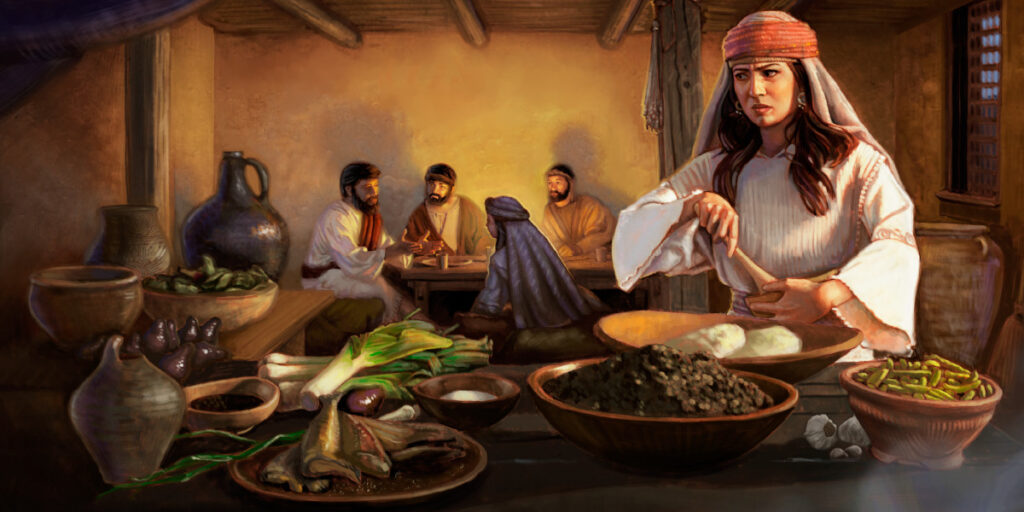
Luke 10 tells the account of Jesus visiting with Mary and Martha, and in verse 40 we are told that “Martha was distracted with much serving.” Meanwhile, Mary is sitting at the feet of Jesus. When Martha complains to Jesus that Mary wasn’t doing anything to help her, Jesus responds to her,

“Martha, Martha, you are anxious and troubled about many things, but one thing is necessary. Mary has chosen the good portion, which will not be taken away from her.”

Jesus defended Mary’s choice as the better thing –the “one needful thing.” According to our Lord, it is more important for us to spend time getting to know Him than it is to be busy doing things for Him.

Have you lost sight of Whom you are serving because you don’t take time to spend with Him? May we all choose the thing that is better and needful and not get distracted by things that are good.

The Message of Christmas

I was doing some shopping at Walmart this past week, and couldn’t help but notice the Salvation Army workers sitting outside with their bells and their buckets. As I approached the door, I watched the bell-ringer as she wished everyone who passed a “Merry Christmas” whether they donated or not.

I suddenly realized that she was not just being nice, but spreading the Good News of Christmas, even though she may not have realized it.

In Luke 2:10-11 the angel proclaims the message of Christmas to the shepherds:

“Fear not: for, behold, I bring you good tidings of great joy, which shall be to all people. For unto you is born this day in the city of David a Savior, which is Christ the Lord.”

The angel’s message was good news that would bring great joy to all people—the message that Christ is come. That is exactly what we are saying when we wish each other “Merry Christmas”—be merry and joyful because Christ has come.

So maybe that Christmas greeting should not be saved just for December. That is a message that should be shared every day of the year. Merry Christmas!