Exalting God, Edifying Believers, Evangelizing the Lost

Finding Christ in the Old Testament

In Luke 24:44, Jesus said,

“These are the words which I spoke to you while I was still with you, that all things must be fulfilled which were written in the Law of Moses and the Prophets and the Psalms concerning Me.”

When Jesus spoke these words to His disciples after the resurrection, He gave them the key to understanding the entire Bible: it all points to Him. The Law, the Prophets, and the Psalms—the three divisions of the Hebrew Scriptures—were not merely ancient writings or moral lessons. They were a unified testimony to Christ, His person, and His work. The cross and the empty tomb were not accidents of history; they were the fulfillment of God’s eternal plan revealed throughout Scripture.

Too often, we read the Bible as a collection of disconnected stories or as a manual for moral living. But Jesus challenges us to look deeper. Every page whispers His name. The sacrifices in Leviticus point to His atoning death. The promises to Abraham anticipate His blessing to the nations. The psalms of lament echo His suffering, while the psalms of triumph anticipate His victory.

To miss Christ in the Old Testament is to miss its heart.

As you open your Bible, ask the Spirit to show you Christ. Don’t settle for information—seek transformation. The Scriptures are not given to make us smarter but to make us more like Jesus. When you find Him in the Word, you find life, hope, and joy. Let every reading be a fresh encounter with our risen Lord.

Tasting God’s Goodness

“O taste and see that the LORD is good: blessed is the man that trusteth in him.” (Psalm 34:8).

David’s invitation is simple and urgent: don’t merely hear about God—experience Him.

To “taste” means getting close enough to savor; to “see” means noticing with eyes opened by encounter. The Psalm pushes us to move from head knowledge to heart experience.

God’s goodness isn’t a theory to argue about; it’s something you can live and enjoy. David wrote from the experience of trouble and rescue, so his words come from real life.

We most often taste God’s goodness in hard times when we run to him for shelter. The blessed person isn’t someone who never hurts, but someone who trusts God in the hurt. That trust steadies us, shapes our choices, and reorders our priorities.

How do we taste and see?

  • First, remember what God has done—recalling how God has kept His promises feeds our faith.
  • Second, practice dependence—pray, read the Bible, obey; these deepen your soul’s appetite for God.
  • Third, tell others—sharing what God has done sharpens your spiritual “taste” and encourages theirs.

If your spiritual appetite feels dull, don’t chase feelings. Come back to the table: read slowly, pray honestly, and find fulfillment in Christ. As you do, God’s goodness will move from idea to experience, and you’ll discover the steady blessing of a soul that truly trusts him always.

Glory from Gratefulness

In Luke 17 we read about Jesus’ healing of ten lepers. When only one returns to give Him thanks, He asks in verse 18,

“Was no one found who returned to give glory to God, except this foreigner?”

Ten men were healed, but only one came back to worship; he was a Samaritan.

Jesus’ question is both a rebuke and a mirror: it exposes how easily we accept God’s gifts and forget the Giver.

God’s grace should produce gratitude, but often we are like the nine who received a blessing and moved on. Only one was truly transformed by it. The Samaritan’s return shows that true thanksgiving is more than manners; it is worship made visible. He not only thanked Jesus—he fell at His feet, glorified God, and praised Him loudly. That posture reveals a heart that recognizes God’s gifts as mercy, not merely a change in circumstances. The nine illustrate a common spiritual danger: we can obey the form of God’s commands and miss the heart of worship.

Romans 1:21 warns that knowing God without glorifying Him leads to a darkened heart; Psalm 103 reminds us to “forget not all his benefits.”

Do God’s blessings leave you more dependent on God or more self‑sufficient? May we be the ones who turn back, fall at His feet, and give glory to God, not as a duty, but as the grateful response of hearts made whole.

Distracted by Serving

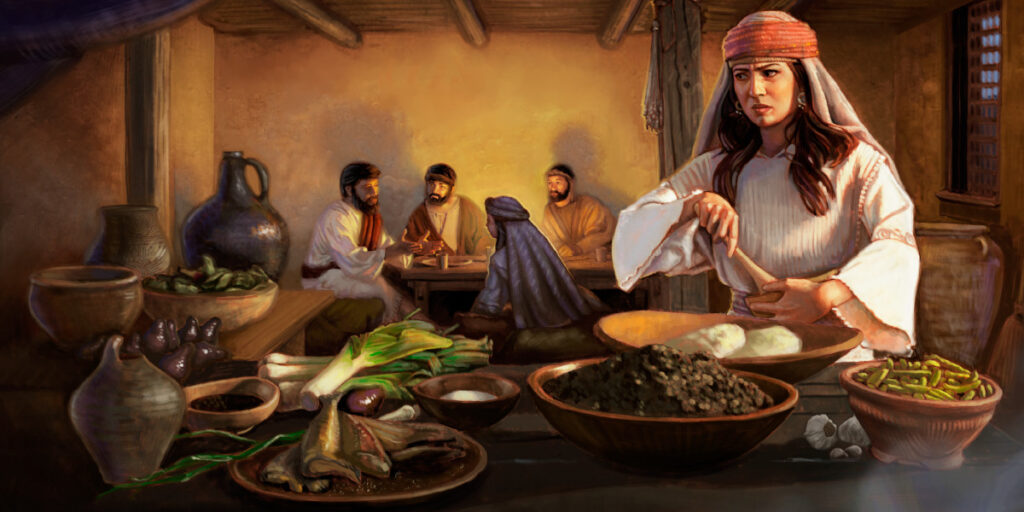
Recently, my wife and I watched a movie in which the main character was so preoccupied with getting ready to serve the prince that was coming to visit that she failed to see that her coworker was actually the prince himself.

While that storyline may make for good entertainment, unfortunately, it actually defines the lives of many believers. It is easy for us to get so caught up and busy in the activity of serving God that we neglect any opportunities to get to know Him.

Luke 10 tells the account of Jesus visiting with Mary and Martha, and in verse 40 we are told that “Martha was distracted with much serving.” Meanwhile, Mary is sitting at the feet of Jesus. When Martha complains to Jesus that Mary wasn’t doing anything to help her, Jesus responds to her,

“Martha, Martha, you are anxious and troubled about many things, but one thing is necessary. Mary has chosen the good portion, which will not be taken away from her.”

Jesus defended Mary’s choice as the better thing –the “one needful thing.” According to our Lord, it is more important for us to spend time getting to know Him than it is to be busy doing things for Him.

Have you lost sight of Whom you are serving because you don’t take time to spend with Him? May we all choose the thing that is better and needful and not get distracted by things that are good.

The Message of Christmas

I was doing some shopping at Walmart this past week, and couldn’t help but notice the Salvation Army workers sitting outside with their bells and their buckets. As I approached the door, I watched the bell-ringer as she wished everyone who passed a “Merry Christmas” whether they donated or not.

I suddenly realized that she was not just being nice, but spreading the Good News of Christmas, even though she may not have realized it.

In Luke 2:10-11 the angel proclaims the message of Christmas to the shepherds:

“Fear not: for, behold, I bring you good tidings of great joy, which shall be to all people. For unto you is born this day in the city of David a Savior, which is Christ the Lord.”

The angel’s message was good news that would bring great joy to all people—the message that Christ is come. That is exactly what we are saying when we wish each other “Merry Christmas”—be merry and joyful because Christ has come.

So maybe that Christmas greeting should not be saved just for December. That is a message that should be shared every day of the year. Merry Christmas!

Keeping Christmas

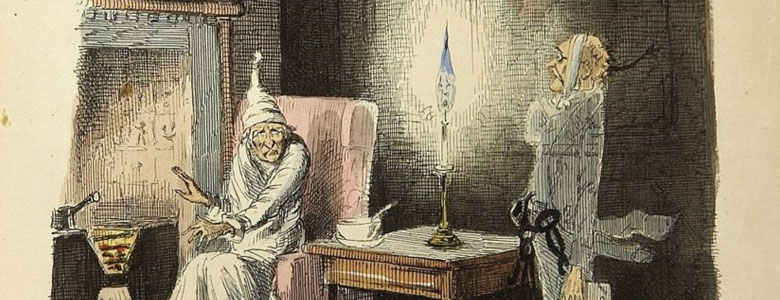
Ebenezer Scrooge (JIM CARREY)

In the opening chapter of Dicken’s famous classic, “A Christmas Carol,” Ebenezer Scrooge is visited in his counting house by his nephew.  The nephew wishes him “Merry Christmas,” after which a discussion occurs between the two about “keeping Christmas.”  Eventually, Scrooge closes the discussion by saying “you keep Christmas in your own way, and let me keep it in mine.”

I believe that our culture has basically adopted the attitude of Scrooge, in that the “keeping” of Christmas boils down to whatever each of us thinks is appropriate.

In Romans 14:6, Paul says this about celebrating holidays:

“He that regardeth the day, regardeth it unto the Lord; and he that regardeth not the day, to the Lord he doth not regard it.”

How we keep Christmas should not be determined by family traditions or culture, but by what gives honor to God.

Colossians 1:18 says that in all things, Jesus “should have the preeminence.” That means that in everything, He should be the focus, the purpose and the motivation.

We celebrate the Christmas season BECAUSE of Christ, and therefore it should be practiced in a way that brings Him all the honor and glory.

So, as you practice your Christmas traditions this year, consider whether you are conforming to the attitude of Ebenezer Scrooge, or following the Word of God.

Serving in the Kingdom

Have you ever thought about serving in a governmental office? Perhaps you have considered being a city council member or running for some other public office.

For many of us, it may have never crossed our minds. But it should. Not necessarily for this earthly government, but for the future government of Christ’s Millennial Kingdom.

Revelation 5:10 says that Christ “hast made us unto our God kings and priests: and we shall reign on the earth.” As believers, we have been given authority, not just to bring the good news to others in this lifetime, but to rule with Christ in the next. The positions that we are given by the Lord in His Kingdom will be determined by how we used His authority in this life. In the Parable of the Talents in Matthew 25, the Master rewards the good stewards who invested their talents well, yielding a good return. His words to them were,

“Well done, good and faithful servant; thou hast been faithful over a few things, I will make thee ruler over many things.”

Jesus was teaching that how we invest our lives and “talents” in this life will determine what authority and rewards we receive in the Kingdom.

So, based on how you are living today, will you be an exalted nobleman over much, or a Kingdom trash collector? It’s not too late to do better.

O Come Let Us Worship

There are many people who claim to worship God but only step foot inside a church on Christmas and Easter, and maybe for funerals and weddings.

Obviously, we who frequent church on a regular basis wouldn’t call that worship. But true worship is not defined how often we are in church anyway.

Psalm 95:6 tells us,

“O come, let us worship and bow down: let us kneel before the LORD our maker.”

While the terms “bowing down” and “kneeling,” describe the physical actions of worship, these terms also describe the inner attitude of worship as well.  Bowing down and kneeling show an attitude of submission to a higher authority, which is exactly what our attitude before God should be if we are to worship Him in “spirit and in truth.”

The real question is whether we only demonstrate that attitude on Sundays, if even then, or if that attitude is prevalent in our lives every day of the week.

The answer to that question is answered by the things we value most and which we expend the most time and effort trying to achieve in our lives. Do our daily choices and lifestyle show that God truly is the most important and valuable thing to us? Or is He just someone we have added to our weekly routine to appear religious?

True worship is about bowing before Him in everything you do, not just what you do on Sundays.

God With Us

Have you ever experienced loneliness in your life?  If so, you are not alone (pun intended).

According to Medical News Today, just in the last 2 years, there has been an “alarming increase” in the number of people who have experienced severe loneliness in their lives. The alleged cause is, of course, the COVID pandemic.  But we don’t need a pandemic to experience loneliness.  All we need is an absence of God.

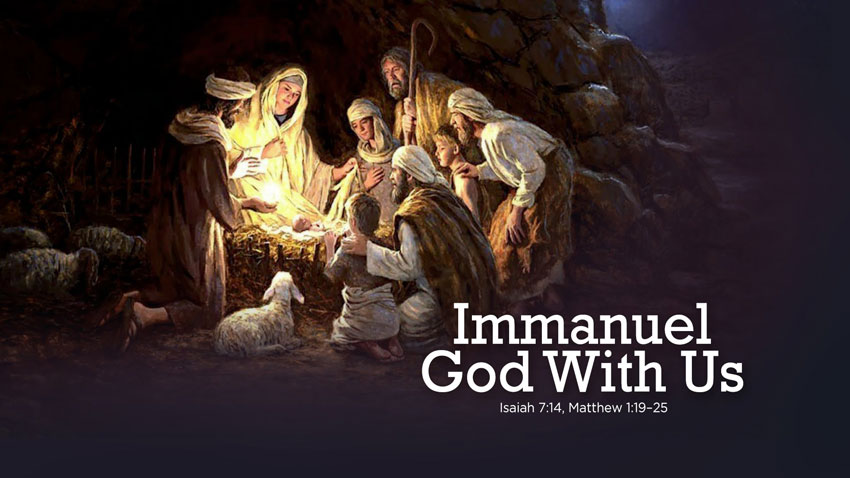
When God created humans, He created us with an inherent need for Him. We need other people, but people cannot fill the spiritual void that can only be filled by God.  And that is why He sent Jesus Christ to earth in Bethlehem over 2000 years ago.  As the angel told Joseph in Matthew 1:23,

“and they shall call his name Emmanuel, which being interpreted is, God with us.”

Jesus was sent to be GOD WITH US. He became God in the flesh to reconcile our relationship with God which we had broken. Through Him, we can finally experience the purpose for which He created us in the first place–fellowship with Himself.

But to have fellowship, you have to be WITH the other person.  And that is exactly what Jesus accomplishes—He is GOD WITH US all the time.  He is the best and only cure for loneliness and one which will last for eternity.

Christmas Past

In Charles Dickens’s “A Christmas Carol,” Ebenezer Scrooge is visited by three ghosts, the first of which is the Ghost of Christmas Past.

The purpose of this visit was to show Scrooge how he had changed for the worse over the years and to remind him of merry Christmases that he had celebrated previously in his life. If only Scrooge could remember what he used to be, maybe he could become the right kind of man in the present.

If there is one specific Christmas of which we need to be reminded as believers, it is the very first Christmas, the night that Jesus was born. When the angel announced the impending birth of Jesus to Joseph, he made it very clear what would be important about Christmas:

“And she shall bring forth a son, and thou shalt call his name JESUS: for he shall save his people from their sins” (Matthew 1:21).

While many of our past Christmases may include wonderful memories of family and friends and even joyful fellowship and celebration, Christmas would not exist without Christ as our Savior. He is what we should celebrate and remember at Christmas time. And let us not just remember that He was born in a manger, but that He came to save us from our sins.

So, this Christmas, and every Christmas, may we celebrate the Savior and not just the season.